
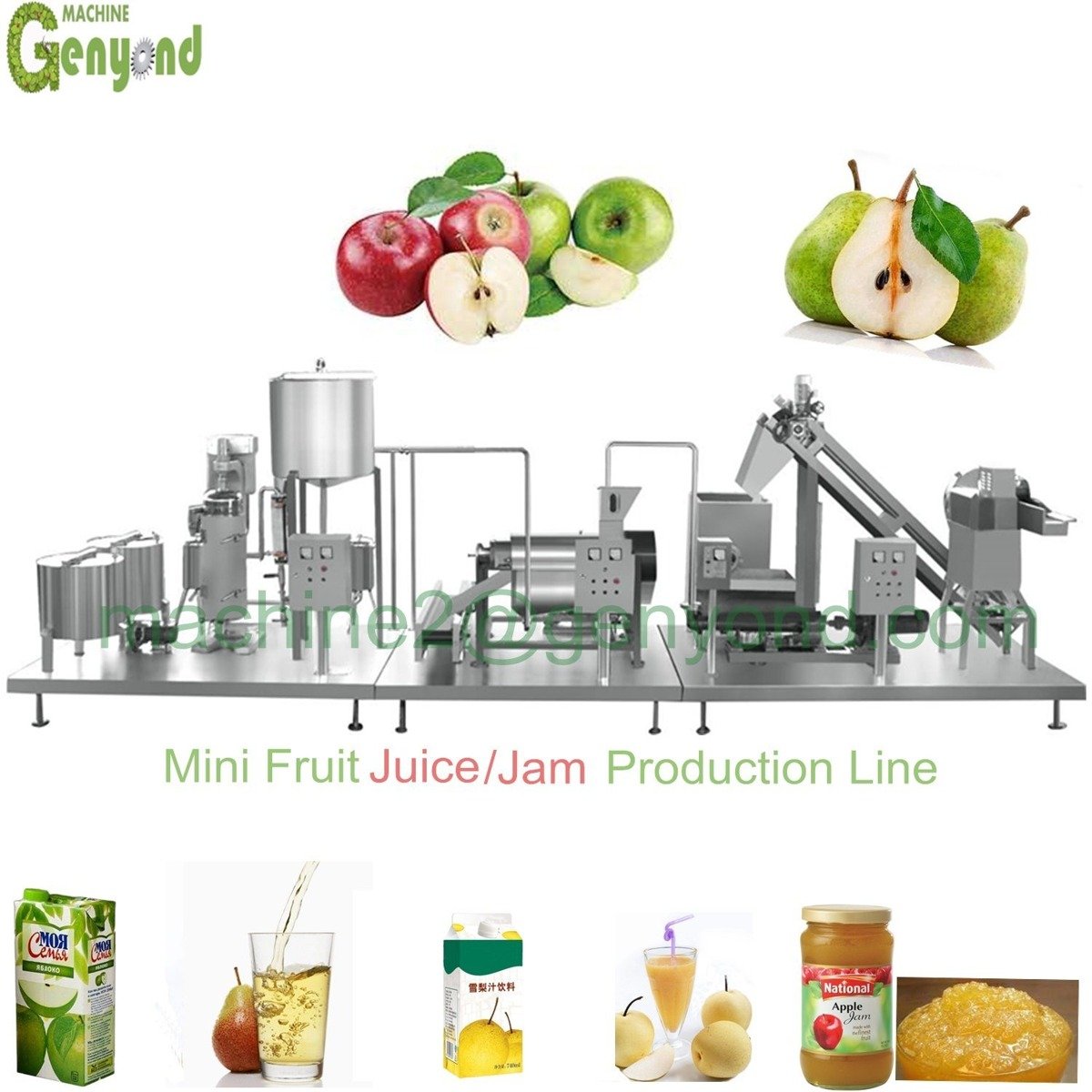
Production line and factory setup overview
A hygienic line for washing, sorting, crushing, preheating, pulping, refining, blending, deaeration, pasteurization and filling apple puree.
Recommended lowest-entry line configuration For the lowest credible entry, select a 500 kg/h fruit line with washer, sorting table, crusher, blancher, two-stage pulper-refiner, blend tank, deaerator, pasteurizer and pouch or jar filler.
Production process and implementation sequence
- Fruit receiving, lot coding and residue-risk review
- Washing, sorting and defect removal
- Crushing and controlled preheating or blanching
- Two-stage pulping and seed/skin separation
- Fine refining and optional enzyme treatment
- Recipe blending, deaeration and acidity adjustment
- Validated pasteurization
- Hot filling or validated pouch filling, cooling and release
Products, capacity and market fit
- Processing-grade Afghan apples can become a stable ingredient instead of being lost during harvest peaks.
- Puree supplies bakeries, dairy processors, hotels and sauce makers with consistent texture and fruit solids.
- A shared pulping line can later process approved apricot, pear or peach recipes after validated changeover.
- Infant-food sales require a separate compliance decision, stricter raw-fruit contracts and documented hazard controls.
- Standard apple puree - Buyer-approved Brix, acidity, screen size, color and microbiology - Bakeries, dairy plants, food service and ingredient buyers
- Apple-apricot or apple-pear puree - Validated recipe using traceable fruit lots - Retail, bakery and dairy buyers
- Baby-fruit puree - Only under validated infant-food contaminant, thermal and packaging controls - Qualified institutional or branded baby-food buyers
Core production machinery and line specifications
| Machine / stage | Function / value | Production note |
|---|---|---|
| Fruit washer and sorting conveyor | Removes field soil and visibly defective fruit | Low-drop food-grade contact and potable rinse |
| Crusher and feed pump | Creates a uniform mash for heating and pulping | Guarded drive with sanitary cleanout |
| Tubular preheater or blancher | Softens tissue and controls enzymatic browning | Recorded time-temperature treatment |
| Two-stage pulper-refiner | Separates puree from skins, seeds and coarse fibre | Interchangeable coarse and fine screens |
| Blend tank and ingredient dosing | Standardizes Brix, acidity and recipe | Agitated sanitary vessel with load cells |
| Vacuum deaerator | Reduces entrained air and oxidation | Sized to puree viscosity and flow |
| Tubular pasteurizer | Applies the validated microbial reduction | Automatic temperature recording and diversion |
| Pouch or jar filler | Packs released puree hygienically | One or two buyer-approved launch formats |
Raw materials, utilities and factory requirements
- Sound Afghan apples under residue and maturity specifications
- Potable process water
- Only approved antioxidant or acidity-adjustment ingredients
- Heat-compatible pouches, jars or institutional bags
- Labels, coding ink and cartons
- Stable three-phase electricity
- Food-grade steam or hot-water system
- Potable water and sanitary drainage
- Cooling water for filled packs
- Clean compressed air where specified
Indicative low-entry investment and implementation plan
These planning ranges prioritize economical machinery, local labor and local civil works. Final pricing follows confirmed capacity, product specification, delivery terms and site conditions.
| Scope | Indicative range | Entry-plan note |
|---|---|---|
| Receiving, washing, sorting and crushing | US$12k-25k | One 500 kg/h fruit intake |
| Preheating and two-stage pulping | US$18k-40k | Standard apple-puree duty |
| Blending, deaeration and pasteurization | US$18k-38k | Recorded sanitary thermal process |
| Entry filling, utilities and installation | US$15k-35k | Hot-fill pouch or jar scope |
| Freight, inspection and initial spares | US$8k-20k | Confirm skid and vessel dimensions |
| Indicative low-entry total | US$71k-158k | Aseptic filler, infant-food laboratory, building and working capital excluded |
Detailed proposal and next step
The proposal contains the complete line flow, machinery scope, raw-material and utility requirements, implementation stages and indicative entry planning. Final configuration follows confirmed products, capacity, site and budget.